

We Spent $1,391 on ChatGPT Ads, Here’s the 3 Lessons We Learned

Published: October 28, 2026
Share on LinkedIn Share on Twitter Share on Facebook Click to print Click to copy url
Summarize with ChatGPT
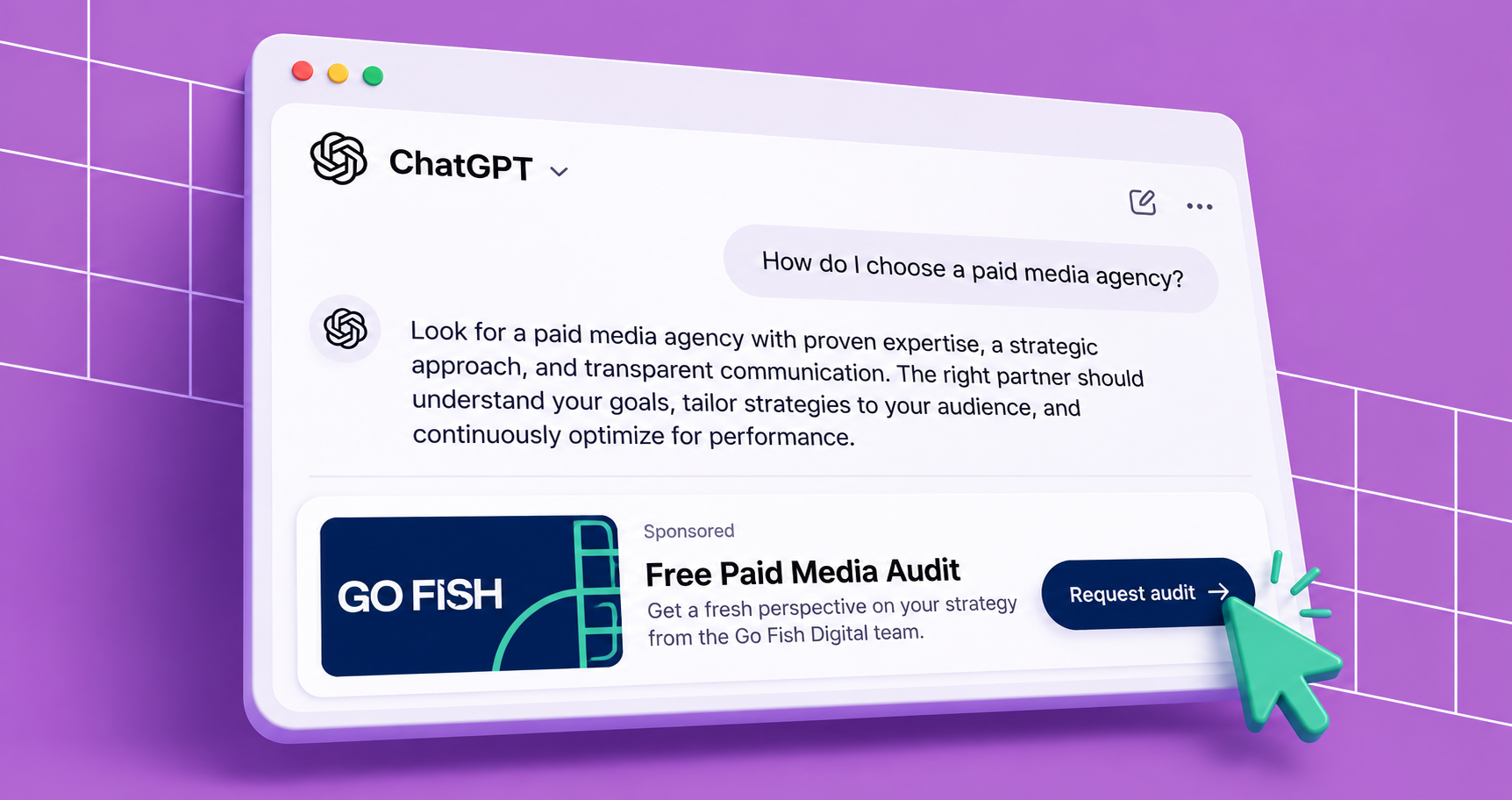
At Go Fish Digital, we started small with ChatGPT ads, using our own budget to get a hands-on understanding of the channel.
Our early review recorded $1,391 in spend across two lead generation campaigns: one for paid media services and one for generative engine optimization (GEO) and AI visibility.
We’ve also recently started launching campaigns for clients. Our own account has given us specific decisions to bring into that work, from which audit offer we want to develop further to whether we should bring a form requirement we already use on Meta into ChatGPT.
Here’s what we did and what we’re taking into the next round.
Lesson 1: Give your first test a specific offer
Our paid media campaign went live first. Two days later, we launched the GEO and AI visibility campaign.
| Campaign | Launch date | Daily budget | Ad groups |
| Paid media lead generation | September 8 | $25 | Agency evaluation, digital advertising agency, and performance marketing and PPC |
| GEO and AI visibility lead generation | September 10 | $35 | AI visibility audit, GEO agency and services, and ChatGPT and AI Overview visibility |
Our copy included broad service messages such as “One Partner for Paid Media Growth” and “Make Your Brand Easier for AI to Find.” We also ran direct offers, including “Free Paid Media Audit” and “Get a Free AI Visibility Audit.”
Our team specifically asked for more iterations of the AI visibility audit ads in the follow-up discussion.
The audit gives the message a defined action: request a review of your brand’s AI visibility.
For another advertiser, the useful point is to include an offer you can describe clearly and test in different ways. A demo, a trial, or a particular product could give you that starting point. For our agency, the audit was a specific offer alongside the broader service messages.
Include a clear next step in your creative test so you can evaluate how people respond to that offer.
Lesson 2: Check which of your planned ads actually ran
Three new GEO copy tests from October never served because they were rejected. We also had an audit ad that ran before later showing as rejected.
Approval status limited which parts of our creative plan went live. Those three new headlines had no delivery history to assess.
That’s something to remember when you look at your own campaign. Before deciding that a message didn’t work, check whether it had an opportunity to run. Keep ads with no delivery separate from the variations you’re comparing on performance.
Review OpenAI’s requirements for ad creative and landing pages before submitting, and allow room in the launch schedule for revisions if they’re needed. Keep checking status once campaigns are running, too.
Verify that each variation actually served before using it to draw conclusions about your messaging.
Lesson 3: Your lead form is part of what you are testing
One of our ChatGPT campaign discussions focused on a requirement we already use on Meta: business email addresses on lead forms.
The team raised whether to apply that requirement to ChatGPT traffic. The preference expressed was to prioritize better-fit business inquiries, even if a stricter form meant fewer submissions.
That raises a practical choice for any business running lead generation ads. How much information should someone provide before submitting? Which fields help your team evaluate the inquiry? Where are you willing to accept more friction?
A business email is one qualification signal. You still need criteria for whether the person’s needs fit what your business offers.
Our team also asked how a disqualified inquiry had been handled in reporting. That’s another detail to settle before judging a campaign: whether you’re looking at all form submissions or inquiries that meet your qualification criteria.
Include those decisions in the offer, destination, and measurement checks you make before launch. Then the form and the reporting can support the business outcome you’re trying to assess.
Decide what makes an inquiry useful to your business before evaluating the campaign on form submissions.
Final Takeaways
ChatGPT ads give brands another opportunity to be considered while someone is researching a purchase, comparing providers, or working out what they need. For businesses with an offer that fits those moments, we see real potential for this channel to earn a place in the media mix.
That’s the opportunity we’re exploring through our own account and the client campaigns we’ve recently launched. We’re learning which brands have the strongest fit and how to build campaigns around the decisions their customers are making. We’ll keep sharing those lessons as our testing develops, giving other advertisers a clearer picture of where to start and what to expect.
If you’re considering ChatGPT ads, request a free GEO Scorecard to see how your brand currently appears in AI search and where you have opportunities to strengthen your visibility before adding paid placements.
