


AI
8 Top Generative Engine Optimization (GEO) Agencies

Published: July 23, 2026
Share on LinkedIn Share on Twitter Share on Facebook Click to print Click to copy url
Summarize with ChatGPT

Generative Engine Optimization (GEO) is the practice of improving how a brand and its content are discovered, understood, selected, cited, and represented in AI-generated answers. GEO agencies help companies build visibility across platforms such as ChatGPT, Google AI Overviews, Google AI Mode, Perplexity, Gemini, Claude, and Microsoft Copilot.
GEO is related to SEO and Answer Engine Optimization (AEO), but the terms are not interchangeable. SEO focuses on visibility in traditional search results. AEO focuses on providing direct, extractable answers to user questions. GEO focuses more broadly on helping generative systems retrieve, interpret, trust, and cite a brand’s content and third-party mentions when producing an answer.
The best GEO agencies combine traditional search expertise with content strategy, technical SEO, entity optimization, structured data, digital PR, prompt research, AI visibility measurement, and an understanding of how retrieval and citation systems work. They should also be able to connect AI visibility to business outcomes such as qualified traffic, leads, demo requests, proposals, and revenue.
This guide evaluates the top Generative Engine Optimization agencies and thought leaders based on their published research, technical expertise, service offerings, proprietary technology, case studies, authority-building capabilities, and demonstrated understanding of AI-powered search.
Key Takeaways:
- What are the top Generative Engine Optimization agencies in 2026? Our top GEO agency picks are Go Fish Digital, iPullRank, Relevance, Siege Media, Omniscient Digital, Perrill, Single Grain, and Spicy Margarita. Each agency has different strengths across technical GEO, content strategy, digital PR, B2B marketing, AI citations, and authority building.
- What does a GEO agency do? A GEO agency helps brands improve their visibility in AI-generated answers. Services can include buyer prompt research, query fan-out analysis, semantic content optimization, entity optimization, structured data, technical SEO, digital PR, citation building, AI visibility tracking, and conversion measurement.
- How were the agencies ranked? Agencies were evaluated based on their GEO-specific services, technical knowledge, published research, proprietary tools, client results, thought leadership, measurement capabilities, and ability to connect AI visibility with business outcomes.
- How is a GEO agency different from an AEO or SEO agency? SEO agencies primarily focus on traditional search rankings and organic traffic. AEO agencies focus on producing direct answers for question-based search experiences. GEO agencies focus on helping brands and content become retrievable, trustworthy, and citation-worthy inside generative AI responses.
- What should companies look for in a GEO agency? Look for an agency with clear GEO methodologies, technical SEO expertise, prompt-level research, structured data capabilities, authority-building services, transparent measurement, published thought leadership, and evidence that its work supports leads or revenue rather than visibility alone.
Get a Free GEO Scorecard
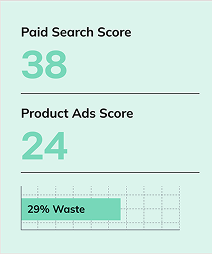
Before you start comparing agencies, it’s worth understanding where your brand stands today. Our GEO Scorecard gives you a quick snapshot of your visibility in AI search and highlights opportunities you may be missing.
Top 8 Generative Engine Optimization Agencies at a Glance
| Agency | Notable Clients and Case Studies | GEO Strengths | Employees | URL |
| #1: Go Fish Digital | GEICO, About Amazon, Wayfair, Jelly Belly; internal GEO case study reporting increased AI referral traffic and conversions | Query fan-out analysis, semantic content audits, prompt mapping, AI citations, structured data, log-file analysis, Digital PR, proprietary GEO tools | 51 to 200 | Visit |
| #2: iPullRank | SAP, American Express, HSBC, Nordstrom, SanDisk, General Mills | Relevance Engineering, information retrieval, embeddings, passage-level optimization, technical SEO, enterprise content strategy | 11 to 50 | Visit |
| #3: Relevance | EY, Chime, Nurx, 1-800-GOT-JUNK, Konica Minolta | AI Authority Engineering, Digital PR, earned media, third-party citations, brand authority, AI visibility | 11 to 50 | Visit |
| #4: Siege Media | Mentimeter, The Zebra, Zendesk; Mentimeter generated substantial visibility and traffic from ChatGPT | Data-driven content, original research, content freshness, Digital PR, authority building, citation-worthy assets | 51 to 200 | Visit |
| #5: Omniscient Digital | SAP, Adobe, Loom, Jasper, Order | B2B content strategy, source-worthiness, topical authority, RAG-informed content, brand and author authority | 11 to 50 | Visit |
| #6: Perrill | Culligan, Dura Supreme | Technical SEO, structured content, schema, semantic HTML, brand mentions, integrated AI search optimization | 11 to 50 | Visit |
| #7: Single Grain | Klassy Network, Superplastic | GEO strategy, AI search content, SEO, demand generation, buyer-intent targeting, growth marketing | 51 to 200 | Visit |
| #8: Spicy Margarita | U.S. financial services company; public GEO work emphasizes high-value B2B recommendations | Bottom-of-funnel prompt targeting, AI citations, entity and source-gap analysis, B2B content production | 11 to 50 | Visit |
Best Generative Engine Optimization Agencies
When evaluating the top agencies for Generative Engine Optimization (GEO), we considered more than just service offerings and client lists. A key part of our ranking method was the demonstrated knowledge of generative search systems—specifically, whether the agency has published in-depth written articles, research studies, or dedicated landing pages (service pages) that clearly explain their approach to influencing large language models and AI-powered search. This emphasis ensures our picks aren’t just riding the buzz around AI SEO, but are actively contributing to industry understanding and thought leadership.
Here are the top agencies that we’d recommend working with:
1. Go Fish Digital
Best for: Enterprise and mid-market organizations that need an integrated GEO program spanning strategy, technical SEO, content, analytics, Digital PR, and engineering.
Go Fish Digital approaches Generative Engine Optimization through a combination of information-retrieval research, semantic analysis, content optimization, prompt mapping, technical SEO, authority building, and AI visibility measurement. The agency’s methodology focuses on helping brands become more retrievable and citation-worthy across Google AI Overviews, AI Mode, ChatGPT, Perplexity, Gemini, and other generative platforms.
Rather than treating GEO as a separate content tactic, Go Fish Digital connects it to the broader search ecosystem. Its work can include identifying buyer prompts, analyzing query fan-out, mapping prompts to existing pages, expanding semantic coverage, improving fact-density, strengthening structured data, and building third-party authority through Digital PR.
Pros
- Combines technical SEO, content, engineering, Digital PR, and analytics.
- Offers proprietary technology for GEO research and measurement.
- Strong emphasis on prompt mapping, semantic analysis, and measurable outcomes.
- Experience working with enterprise and well-known consumer brands.
Cons
- May be more extensive than smaller companies need.
- Custom, cross-channel engagements may require a larger investment than a single-service GEO audit.
2. iPullRank
Best for: Enterprise organizations that need deep technical expertise in information retrieval, content systems, and AI-powered search.
iPullRank’s GEO approach is grounded in its Relevance Engineering framework, which brings together technical SEO, information retrieval, embeddings, content strategy, user experience, and data science. The agency focuses on helping brands build content ecosystems that are relevant across both traditional search and generative experiences.
Its published research explores topics such as probabilistic retrieval, passage-level relevance, query fan-out, AI Mode, embeddings, and the changing relationship between content and search interfaces. This makes iPullRank particularly relevant for organizations with large websites, complex content inventories, and advanced technical requirements.
Pros
- Deep technical understanding of retrieval and relevance.
- Strong enterprise SEO and content experience.
- Extensive public education on AI Mode and modern search systems.
- Suitable for large, technically complex websites.
Cons
- Its highly technical approach may be more than smaller organizations require.
- Enterprise-level engagements may require significant internal resources and investment.
3. Relevance
Best for: Brands that need to combine GEO, Digital PR, earned media, and authority building.
Relevance differentiates itself through an approach it calls AI Authority Engineering. The methodology combines search intelligence, strategic content, Digital PR, brand authority, and third-party validation to improve how brands are represented in AI-generated answers.
This approach addresses an important part of GEO: generative systems do not rely only on a company’s own website. They may retrieve information from publishers, industry resources, comparison pages, review sites, and other third-party sources. Relevance’s earned-media capabilities make it a strong option for brands that need to improve both owned content and off-site authority.
Pros
- Integrates Digital PR directly with GEO strategy.
- Strong focus on third-party authority and brand mentions.
- Useful for brands with reputation or category-positioning challenges.
- Connects content, PR, and AI visibility.
Cons
- Its explicit GEO positioning is newer than its broader search and PR experience.
- Brands seeking primarily technical SEO or engineering support should confirm the exact scope available.
4. Siege Media
Best for: Brands that want to use original research, data-driven content, and Digital PR to increase search and AI visibility.
Siege Media brings an established content marketing and Digital PR background to GEO. Its approach emphasizes original information, freshness, data journalism, content quality, and promotion. These capabilities can help brands create the types of source material that both people and generative systems are more likely to reference.
The agency is particularly relevant for companies that need scalable content production supported by proprietary technology and market-level analysis. Its combination of content strategy, research, design, and outreach can support both owned-media visibility and the external authority signals associated with AI citations.
Pros
- Strong record in content marketing and Digital PR.
- Experienced in producing original, linkable, and citation-worthy assets.
- Proprietary technology supports content planning and freshness.
- Well suited to large-scale content programs.
Cons
- Publicly available GEO-specific case studies remain more limited than its traditional SEO portfolio.
- Companies seeking advanced technical retrieval analysis should confirm that it is included in the engagement.
5. Omniscient Digital
Best for: B2B SaaS and enterprise organizations using content as a primary growth channel.
Omniscient Digital applies its B2B content strategy experience to AI-powered discovery. Its GEO perspective emphasizes source-worthiness, crawlability, topical relevance, content structure, brand authority, and the signals that may influence whether content is retrieved and cited.
The agency’s approach is especially relevant for B2B organizations with complex products and long sales cycles. Omniscient can help those companies build authoritative topic ecosystems rather than publishing isolated articles around individual keywords.
Pros
- Strong specialization in B2B and SaaS content.
- Emphasizes authority and source-worthiness.
- Experienced in building large, interconnected content programs.
- Connects content strategy with business growth.
Cons
- Less public detail about proprietary GEO technology.
- Fewer publicly available GEO-specific case studies than some higher-ranked agencies.
6. Perrill
Best for: Companies looking for a partner that can combine established SEO execution with emerging GEO requirements.
Perrill’s approach blends technical SEO, content optimization, schema, semantic structure, and brand-mention strategies. This makes it a practical choice for companies that want to improve AI search visibility without separating GEO from their existing organic search program.
The agency’s focus on context-rich content and technical accessibility supports the foundational work required for both traditional search and generative retrieval. Its services may be particularly useful for organizations that need implementation support rather than strategy alone.
Pros
- Balanced traditional SEO and AI search capabilities.
- Strong technical and implementation foundation.
- Can integrate GEO work into a larger digital program.
- Relevant for brands that need both strategy and execution.
Cons
- Publishes less GEO-specific research than agencies higher on the list.
- Public information about proprietary GEO measurement tools is limited.
7. Single Grain
Best for: Growth-focused technology, SaaS, and B2B companies that want GEO integrated with a broader digital marketing strategy.
Single Grain combines GEO education and services with content marketing, SEO, demand generation, paid media, and growth strategy. Its approach makes GEO accessible to marketing teams that want to add AI visibility to an existing acquisition program.
The agency has published extensively about GEO and AI search, helping marketers understand how generative systems affect content discovery. Its marketing-forward approach is particularly useful for companies that want to connect AI visibility with broader growth and lead-generation objectives.
Pros
- Extensive library of accessible GEO education.
- Strong connection between GEO and growth marketing.
- Suitable for SaaS, technology, and B2B organizations.
- Can support multiple acquisition channels.
Cons
- Public GEO content is generally more marketing-focused than retrieval-engineering focused.
- Technical depth may vary depending on the engagement and assigned team.
8. Spicy Margarita
Best for: B2B organizations seeking a specialized, boutique GEO partner focused on commercial prompts.
Spicy Margarita focuses on helping B2B brands appear in high-value AI-generated recommendations. Its work emphasizes bottom-of-funnel prompts, source gaps, entity gaps, citation opportunities, and content designed around the questions buyers ask while evaluating solutions.
This commercial focus distinguishes Spicy Margarita from agencies that primarily target broad informational visibility. Its methodology is most relevant for companies that want to influence prompts involving vendors, platforms, service providers, comparisons, and purchasing decisions.
Pros
- Clear specialization in B2B GEO.
- Strong focus on commercially valuable prompts.
- Boutique model may allow for focused strategy and close collaboration.
- Connects citations with buyer evaluation and revenue opportunities.
Cons
- May offer fewer engineering and large-scale implementation resources than a larger agency.
- Smaller agency footprint than enterprise competitors.
How to Choose a Generative Engine Optimization Agency
Selecting the right Generative Engine Optimization (GEO) agency is critical for brands that want to secure visibility in AI-powered search environments like Google’s AI Overviews, ChatGPT, Perplexity, and SearchGPT. Because GEO is still an emerging discipline, not all SEO agencies are equipped to handle its technical, strategic, and engineering demands. When evaluating potential partners, here’s what to prioritize:
1. Deep Knowledge of the Patents Powering GEO
A truly advanced GEO agency should demonstrate mastery of the patents and research that underpin how AI search systems work. This includes:
- Google. Generating a stateful response to a search query — International Patent Application No. WO2024064249A1 (link)
- Google. Retrieval of information using trained neural networks — U.S. Patent No. US11769017B1 (link)
- Google. Generating query answers from a user’s history — U.S. Patent Application No. US20250036621A1 (link)
- Google. Context-aware query classification using user-specific context — U.S. Patent No. US9449105B1 (link)
- Introducing MUM: A new AI milestone for understanding information — Google Blog (link)
These documents reveal how LLMs retrieve, rank, and present content — knowledge that directly informs how to influence AI-driven answers.
2. Ability to Build Custom Technology
GEO requires reporting and insights that often can’t be delivered with standard SEO toolsets. Look for agencies that have built proprietary tools or integrations to:
- Track brand mentions in AI-generated responses.
- Measure similarity between your content and AI output.
- Audit AI Overview inclusion frequency.
- Surface technical and semantic factors directly correlated with retrieval success.
For enterprise-level brands, the ability to create dynamic dashboards, run custom API pulls, and integrate data with internal analytics systems is a significant advantage.
3. Flexible Service Structure
GEO touches multiple disciplines. The best agencies can seamlessly move between:
- Technical SEO — Schema markup, semantic HTML, crawlability.
- Engineering Support — Log file analysis, AI retrieval simulations, data modeling.
- GEO-Specific Strategy — Entity optimization, citation engineering, RAG-informed content creation.
4. Proven Results Across Verticals
Top GEO (Generative Engine Optimization) agencies should show case studies or examples of influencing LLM outputs for different industries and business sizes — from B2B services to eCommerce, and from startups to global enterprises.
In short, the right GEO (Generative Engine Optimization) SEO agency blends patent-driven research, proprietary technology, engineering capabilities, flexible service delivery, and proven results — ensuring your brand is positioned for both the current AI search landscape and its next evolution.
Frequently Asked Questions About GEO Agencies
Top questions and answers around GEO (Generative Engine Optimization):
What KPIs should be tracked for Generative Engine Optimization (GEO)?
Unlike traditional SEO, where rankings, impressions, and organic traffic are primary indicators, GEO KPIs focus on visibility and influence inside AI-driven results. Some of the most important metrics include:
- AI Overview Inclusion Rate – How often your content appears in Google’s AI Overviews.
- LLM Citation Frequency – The number of times your brand is referenced or quoted by tools like ChatGPT, Perplexity, or SearchGPT.
- Query Match Coverage – Percentage of high-value prompts (including query fan-out variations) where your brand appears.
- Similarity Scores – How closely your content matches AI-generated answers for targeted queries.
- Entity Recognition Strength – How well LLMs and search engines identify your brand or subject matter experts as trusted sources.
- Assisted Conversions from AI Mentions – Conversions or inquiries traced back to customers influenced by AI-generated answers.
What are the best strategies for GEO (Generative Engine Optimization)?
The most effective GEO (Generative Engine Optimization) strategies center around expanding your semantic footprint — the breadth and depth of content coverage across all relevant prompts, both direct and indirect (query fan-out). This typically involves:
- Earning Topical Authority – Consistently publishing high-quality, expert-level content within a specific topic or niche that increases information gain scoring to semantically boost an overall “topical score.”
- Improving “Site Score” – Google’s pagerank determination also scales to an overall “site score” that’s captured from a variety of User signals. Improving this score tends to improve visibility in AI Search inclusion. See “Site Quality Score” patent.
- Fact Density – At it’s core, LLMs want to capture knowledge. And they crawl the internet for the latest information available on certain subjects. Using grounding methods, these machines can “fact-check” content on pages. Fact-density on individual pages or “at-scale” are also great ways to push on further inclusion in AI Search systems.
- Query Mapping – Identifying and addressing the evolving set of questions your target audience asks, both in search engines and in conversational AI. Both for query-fan out opportunities and directly-related prompts.
- Structured Content – Using semantic HTML, schema markup, rich-content, and clean formatting to improve machine readability.
- Citation & Source Building – Earning brand mentions in authoritative publications and knowledge bases AI systems trust.
- Continuous Monitoring – Staying ahead of new prompts and questions as LLMs and user behavior evolve.
Why is buyer’s journey mapping more important in GEO (Generative Engine Optimization) than in traditional SEO?
In a GEO-first world, search is shifting from keyword-driven to question-driven — meaning visibility depends on answering the right questions at the right stage of the buyer’s journey. Mapping the buyer’s journey now requires:
- Understanding the specific questions, concerns, and decision points of each customer segment.
- Recognizing that prompts in LLMs can vary based on demographics, sentiment, and context, not just search volume.
- Creating content that aligns with awareness, consideration, and decision stages in ways AI models can detect and retrieve.
- Anticipating query fan-out, where a single initial question from a user can lead an AI system to surface related follow-up topics your brand should own.
By aligning GEO (Generative Engine Optimization) strategies with buyer’s journey mapping, brands can ensure they remain visible and relevant throughout the entire AI-driven discovery and decision-making process.
What services do GEO agencies provide?
Common GEO services include prompt research, query fan-out analysis, semantic content audits, page optimization, entity optimization, structured data, technical SEO, Digital PR, citation building, AI visibility tracking, competitor analysis, log-file analysis, and conversion measurement.
The exact service mix varies. Some agencies specialize in content, while others focus more heavily on technical SEO, Digital PR, analytics, or enterprise strategy.
What is the difference between a GEO agency and an SEO agency?
An SEO agency primarily helps a website improve rankings, organic visibility, and traffic from traditional search engines. A GEO agency focuses on improving whether a brand or source is retrieved, summarized, cited, or recommended inside AI-generated answers.
The disciplines overlap. Strong GEO programs still rely on technical SEO, authoritative content, links, structured data, and a well-organized website.
What is the difference between GEO and AEO?
Answer Engine Optimization focuses on creating direct, concise, extractable answers for question-based experiences. Generative Engine Optimization addresses the broader process through which generative platforms retrieve sources, evaluate relevance, synthesize information, cite content, and represent brands.
Many companies use SEO, AEO, and GEO together as part of one search strategy.
How much does a GEO agency cost?
GEO agency pricing depends on the size of the website, number of markets, technical complexity, content requirements, reporting needs, and whether the engagement includes Digital PR or engineering support.
Monthly retainers can range from several thousand dollars for a focused program to $20,000 or more for an enterprise engagement. One-time audits may cost less, but implementation, measurement, and authority building usually require ongoing work.
How long does GEO take to produce results?
The timeline varies based on the starting condition of the website, the competitiveness of the topic, content quality, technical issues, external authority, and how frequently AI systems refresh their sources.
Some changes may affect visibility within weeks, while broader improvements to authority, semantic coverage, and citation frequency may take several months. GEO performance should be measured over repeated prompts and time periods rather than through a single response.
How should GEO agency performance be measured?
GEO performance can be measured using prompt coverage, brand mentions, citation frequency, source visibility, AI share of voice, AI Overview inclusion, AI referral traffic, assisted conversions, leads, and revenue.
Because AI-generated answers vary, measurement should use repeated tests across multiple prompts, prompt variations, platforms, and dates.
Can a GEO agency guarantee that a brand will be cited?
No reputable GEO agency should guarantee that a brand will always appear or be cited in an AI-generated response. Generative systems are probabilistic and can produce different answers based on the wording of a prompt, user context, platform, source freshness, and model updates.
An agency can improve the conditions associated with retrieval and citation, but it cannot control every generated answer.
Does GEO replace traditional SEO?
No. GEO builds on many of the same foundations as SEO, including crawlability, content quality, relevance, authority, internal linking, structured data, and user experience.
Traditional search also remains an important discovery channel. Most brands should treat GEO as an expansion of their search strategy rather than a replacement for SEO.
Which businesses should hire a GEO agency?
GEO agencies are most useful for organizations whose customers research products, services, vendors, or complex topics through AI-powered platforms. This can include B2B companies, SaaS providers, professional services firms, eCommerce brands, healthcare organizations, financial companies, publishers, and enterprise businesses.
A GEO agency may be especially valuable when AI systems describe the brand inaccurately, competitors dominate relevant prompts, or internal teams lack the tools required to measure AI visibility.
More on AI search from Go Fish Digital
- How to Find Pages on Your Site That ChatGPT May Be Hallucinating
- OpenAI’s Latest Patents Point Directly to Semantic SEO
- Everything an SEO Should Know About SearchGPT by OpenAI
- How to See When ChatGPT is Quoting Your Content By Analyzing Log Files
- What is Generative Engine Optimization (GEO)?
- Generative Engine Optimization (GEO) Strategies
This article was last reviewed and fact-checked on July 20, 2026. Agency rankings, service offerings, published research, client examples, pricing availability, and company information were reviewed using publicly available information. Pricing, team size, services, and leadership can change, so companies should confirm current details directly with each agency before selecting a partner. Agency owners or representatives who believe information in this article is inaccurate may contact Go Fish Digital to request a correction.
