



Top Generative Engine Optimization (GEO) Agencies and Thought Leaders for eCommerce Brands

Published: July 23, 2026
Share on LinkedIn Share on Twitter Share on Facebook Click to print Click to copy url

Generative Engine Optimization (GEO) — sometimes referred to as AEO (Answer Engine Optimization) or AI SEO — is the practice of optimizing content to influence how large language models (LLMs) like ChatGPT, Google’s AI Overviews, Perplexity, and AI “search modes” retrieve, summarize, and present information.
While traditional SEO focuses on ranking webpages in search engines like Google or Bing, GEO targets the training data, retrieval mechanisms, and context selection used by AI systems to ensure your brand, product, or expertise is surfaced in conversational and generative answers.
This involves structuring information so it’s easily discoverable, semantically relevant, and contextually authoritative to AI models, enabling visibility in emerging AI-powered search experiences beyond standard organic rankings.
Key Takeaways
Top agencies to work with: Our ranking of GEO agencies for eCommerce brands is based on proven expertise in AI search visibility, technical SEO, product feed optimization, structured product data, content strategy, and authority building. Go Fish Digital, Siege Media, Single Grain, Relevance, iPullRank, Omniscient Digital, Perrill, and Spicy Margarita stand out for their ability to help brands improve visibility across AI-powered search experiences.
What to look for in an eCommerce GEO agency: The right partner should understand how AI systems retrieve, summarize, compare, and recommend products. For eCommerce brands, this means optimizing product detail pages, category pages, product feeds, buying guides, reviews, schema, entity signals, and third-party citations.
Why eCommerce GEO matters: Shoppers are no longer only searching with short keywords. They are asking AI tools for recommendations, comparisons, alternatives, and buying advice. If your brand is not included in AI-generated answers, you may lose visibility before a shopper ever reaches Google’s traditional organic result
Our Top Generative Engine Optimization Agency Picks for eCommerce Brands
| Agency | Notable eCommerce Case Studies | eCommerce Strengths | Employees | URL |
| #1: Go Fish Digital | Sur La Table, Solly Baby, Prime Bites, HP, Jelly Belly | eCommerce SEO, GEO, technical SEO, digital PR, paid media, proprietary AI tools | 200 to 300 | Visit |
| #2: Tinuiti | Rebecca Minkoff, Wild Planet, DSW, Etsy, e.l.f. Beauty, The Honest Company | Retail media, commerce marketing, AI SEO, performance marketing | 1,000+ | Visit |
| #3: Wpromote | Whirlpool, Brown Jordan, Travelpro, Reef, KidKraft, Klipsch | Retail and eCommerce growth, AI search tracking, Polaris IQ, structured data | 501 to 1,000 | Visit |
| #4: Siege Media | Instacart, Williams Sonoma, Zapier, Zendesk, The Zebra | eCommerce GEO, content, digital PR, affiliate partnerships, product citations | 51 to 200 | Visit |
| #5: Power Digital | Casper, Skechers, Lord & Taylor, O’Neill, MyFitnessPal | eCommerce SEO, GEO, product page optimization, rich snippets, growth marketing | 501 to 1,000 | Visit |
| #6: Coalition Technologies | Harvard Business Services, Payless, Pink Lily, Ford Accessories | eCommerce SEO, Shopify SEO, BigCommerce SEO, AI SEO, development support | 51 to 200 | Visit |
| #7: Charle | Gymshark, Hairburst, Tangle Teezer, Represent | Shopify AI SEO, eCommerce GEO, AI search optimization, Shopify Plus, product discovery | 11 to 50 | Visit |
This article was reviewed for accuracy and updated for eCommerce GEO. Our agency list was last updated: July 18, 2026.
GEO Agencies for eCommerce Brands to Work With
When evaluating the top agencies for eCommerce Generative Engine Optimization, we considered more than general GEO positioning. Ecommerce brands have different needs than SaaS, finance, healthcare, or B2B services brands. They need agencies that understand product catalogs, category pages, product feeds, product detail pages, structured data, reviews, marketplace visibility, retail media, and conversion-focused organic growth.
A key part of our ranking method was whether the agency has a demonstrated ability to help brands improve visibility in search and AI-driven discovery environments, especially where product recommendations, category comparisons, and buyer-intent prompts matter. We also looked for public thought leadership, dedicated GEO or AI SEO service pages, eCommerce SEO experience, proprietary technology, and the ability to connect visibility to measurable business outcomes.
Here are the top agencies that we’d recommend working with:
1. Go Fish Digital
Go Fish Digital is one of the strongest agencies for eCommerce Generative Engine Optimization because it combines eCommerce SEO, technical SEO, digital PR, paid search, social media, and proprietary AI search technology. For eCommerce brands, this matters because AI visibility is not just a content problem. It depends on whether AI systems can crawl, understand, trust, compare, and recommend your products.
Go Fish Digital’s eCommerce services page highlights work with brands including HP, Wayfair, Jelly Belly, and Solly Baby. The agency positions its eCommerce work across SEO, digital PR, paid search, social media, and generative engine optimization, which gives it a broader foundation than agencies that only approach GEO as a content or analytics service.
Their Generative Engine Optimization service also includes proprietary tools like Barracuda, the AI Overview Analyzer, and Semantic Content Audit. These tools are built to evaluate visibility in AI-powered results, improve semantic coverage, and surface page-level changes that can help content become more retrievable, reference-worthy, and useful in generative search environments.
For eCommerce teams, Go Fish Digital’s GEO thinking is especially relevant because the agency has published specifically about retrieval-ready eCommerce content and product feed optimization for AI shopping. Their eCommerce GEO content emphasizes that product pages need to evolve from traditional marketing pages into machine-readable knowledge sources that AI systems can understand and recommend.
Proprietary eCommerce GEO Toolkit
Semantic Content Audit – Evaluates whether your site has the topical depth, semantic coverage, and product/category information needed for AI systems to understand your brand as a trusted source.
AI Overview Analyzer – Tracks visibility and reference frequency in Google’s AI-generated answers, helping eCommerce brands see where their products, categories, and content appear in AI search results.
Barracuda – An AI-powered platform that supports SEO, content, PR, and paid media analysis with page-level recommendations, semantic and entity analysis, internal linking insights, competitor benchmarking, and SERP analysis.
Product and Category GEO Strategy – Helps eCommerce brands improve the way product pages, category pages, buying guides, and comparison content are structured for AI retrieval.
Product Feed and AI Shopping Strategy – Supports the idea that product feeds need to do more than meet minimum Merchant Center requirements. They need to provide clear, complete, confidence-building product information that AI systems can evaluate.
Reasons to Work With Them
eCommerce and GEO expertise together – Go Fish Digital is not just a general GEO agency or a traditional eCommerce SEO shop. It has a dedicated eCommerce offering and a dedicated GEO offering, which makes it a strong fit for brands trying to solve both problems at once.
Proprietary AI search tools – GEO measurement is still emerging, and standard SEO tools do not fully show how often a brand appears in AI-generated answers. Go Fish Digital’s proprietary tools help address this measurement gap.
Technical SEO foundation – Ecommerce GEO depends on crawlability, structured data, internal linking, product templates, category architecture, and clean site structure. Go Fish Digital has the technical SEO experience needed to address these foundations.
Digital PR and authority building – AI systems often rely on third-party sources to validate brands and products. Go Fish Digital’s digital PR capabilities help eCommerce brands build the external authority signals needed for AI visibility.
Retail-specific AI search thought leadership – Go Fish Digital has published specifically about enterprise retail GEO, product feeds, retrieval-ready eCommerce content, AI shopping, and recommendation visibility. That makes its eCommerce GEO positioning more specific than agencies that only discuss AI search generally.
If you want an eCommerce GEO partner that blends technical SEO, product discovery strategy, AI search visibility, digital PR, paid media, and proprietary tooling, Go Fish Digital is one of the most competitive agencies in the field.
2. Tinuiti
Tinuiti is one of the strongest eCommerce-focused agencies to consider for GEO because of its deep retail media, commerce marketing, and performance marketing background. The agency has also introduced AI SEO services, which it describes as part of the next era of AI-powered search and generative engine optimization.
For eCommerce brands, Tinuiti’s biggest strength is its commerce-first orientation. Many agencies have started talking about GEO, but Tinuiti already works in the retail ecosystem where product visibility, paid media, marketplace strategy, and commerce measurement matter. Its commerce media page emphasizes unified commerce operations and the need to connect online and offline sales influences across a fragmented retail media landscape.
Tinuiti’s AI SEO positioning also focuses on how search is shifting from queries to conversations, why traditional organic traffic is changing, and why brands need new measurement approaches for AI-powered search experiences.
Pros
Commerce media expertise – Tinuiti has strong credibility in retail media and commerce marketing, making it a natural fit for large retailers and marketplace-driven brands.
AI SEO offering – The agency has publicly positioned AI SEO and GEO as part of its search offering, which makes it more relevant than general eCommerce agencies that have not yet built a public AI search practice.
Retail performance mindset – Tinuiti understands that product discovery needs to connect to sales, media investment, retail operations, and measurable growth.
Enterprise scale – For large retail and consumer brands, Tinuiti has the size and infrastructure to support complex, multi-channel programs.
Cons
Less GEO-specific technical positioning – Tinuiti has strong commerce and AI SEO positioning, but its public materials are less focused on AI retrieval mechanics, semantic engineering, and product-level GEO strategy than some more specialized search agencies.
More media-led than owned-search-led – Tinuiti’s commerce strength is valuable, but brands looking for deep technical SEO, AI Overview inclusion work, and owned content optimization may want a more GEO-specialized partner.
3. Wpromote
Wpromote is another strong eCommerce GEO agency option because it combines retail and eCommerce marketing with AI-powered search tracking and proprietary marketing technology. Its retail and eCommerce services focus on data-backed, full-funnel strategies for scaling retail growth.
Wpromote’s AI-powered search service is especially relevant for GEO because it focuses on monitoring visibility across LLMs, tracking share of voice, and identifying emerging AI search opportunities through Polaris IQ. The agency’s AI search page also emphasizes that brands need more than keywords. They need adaptive strategies, structured data, and creative built for AI experiences.
For eCommerce brands, that combination matters because AI search visibility needs to be measured against business impact. It is not enough to know that a brand appeared in an AI answer. Ecommerce teams need to understand which prompts, products, categories, and competitors are shaping AI-driven discovery.
Pros
AI visibility measurement – Wpromote has a strong public story around monitoring LLM visibility, tracking AI search share of voice, and using data to identify where ROI may be highest.
Retail and eCommerce growth experience – The agency’s retail and eCommerce services are built around full-funnel growth, which is useful for brands that want GEO tied to acquisition, conversion, and revenue.
Proprietary technology – Polaris IQ is positioned as Wpromote’s proprietary marketing intelligence platform, giving the agency a technology-backed story around analytics, forecasting, benchmarking, and AI-powered insights.
Structured data emphasis – Wpromote’s AI search positioning mentions structured data and adaptive content strategies, which are important for eCommerce brands trying to improve machine readability.
Cons
Less product-feed-specific positioning – Wpromote’s AI search offering is strong, but it is not as publicly focused on product feeds, catalog completeness, or AI shopping-specific optimization.
Less public depth around retrieval mechanics – The agency has a strong measurement and platform story, but less public thought leadership on how AI systems retrieve, synthesize, and cite product information.
4. Siege Media
Siege Media is a strong eCommerce GEO agency because it has a dedicated eCommerce GEO service page and a strong content, digital PR, affiliate, and authority-building model. The agency positions its eCommerce GEO service around rankings, AI citations, and sales across Google, ChatGPT, and other LLMs that shoppers use.
This makes Siege especially relevant for eCommerce brands that need to improve product citations, category recommendations, and brand mentions in AI-generated answers. Their eCommerce GEO page emphasizes technical SEO, citation-led GEO strategies, and affiliate partnerships, which are all important for retail brands competing in AI shopping discovery.
Siege Media also publishes broader GEO thought leadership around being cited in AI answers, structuring content for ChatGPT and Gemini, and measuring brand visibility across AI-driven channels.
Pros
eCommerce-specific GEO positioning – Siege has a dedicated eCommerce GEO agency page, which makes it one of the most directly relevant competitors on this list.
Strong content and digital PR foundation – Ecommerce brands need more than product pages. They need buying guides, comparison content, expert resources, and third-party authority. Siege is strong in this area.
Affiliate and publisher strategy – AI systems often reference sources that compare, review, or recommend products. Siege’s affiliate and digital PR capabilities can help brands earn visibility in those third-party environments.
AI citation strategy – Siege explicitly focuses on product citations, brand mentions, and category recommendations in AI search experiences.
Cons
More content-led than full-service commerce-led – Siege is strong for content, PR, and authority, but brands that need paid media, product feed strategy, social commerce, and broader eCommerce growth support may need a more comprehensive partner.
Less emphasis on proprietary AI tooling – Siege has strong GEO positioning, but Go Fish Digital has a stronger public story around proprietary AI search tools built for analysis and execution.
5. Power Digital
Power Digital is a strong eCommerce GEO contender because it has both eCommerce SEO capabilities and a dedicated GEO service offering. Its SEO page says its eCommerce SEO work includes ranking for top search terms, educating around products, maximizing conversions, optimizing product pages, improving on-site search, and leveraging rich snippets to increase visibility and drive sales.
Power Digital’s GEO service page positions generative engine optimization as a way for brands to earn visibility in AI-powered tools like ChatGPT, Gemini, Perplexity, Claude, and Microsoft Copilot. It emphasizes structured, context-rich, conversational content that LLMs can find, understand, and surface in real-time answers.
For eCommerce brands, Power Digital is a good fit when GEO needs to connect to broader growth marketing. The agency’s performance mindset may be useful for teams that want to tie AI search visibility back to organic revenue, conversion rate, paid media, analytics, and customer acquisition.
Pros
eCommerce SEO foundation – Power Digital publicly emphasizes product page optimization, category architecture, rich snippets, on-site search optimization, and conversion-focused SEO for online stores.
Dedicated GEO service – The agency has a dedicated GEO page, making it more relevant than traditional eCommerce SEO agencies that have not yet built a public AI search offering.
Performance marketing approach – Ecommerce GEO should ultimately connect to business outcomes. Power Digital’s broader growth marketing model gives it a useful performance lens.
AI visibility and citation tracking – Power Digital’s GEO content also references the need to track visibility, citations, sentiment, and search value from prompt to conversion.
Cons
Broader growth agency positioning – Power Digital covers many marketing channels, so its GEO offering may not be as specialized as agencies with deeper technical AI search or product discovery thought leadership.
Less specific retail GEO content – The agency has strong eCommerce SEO and GEO pages, but less public content specifically focused on AI shopping, product feeds, and retrieval-ready eCommerce content.
6. Coalition Technologies
Coalition Technologies is a strong option for eCommerce brands that need SEO, AI SEO, Shopify support, BigCommerce support, and technical implementation. The agency positions itself as an SEO company with expertise across digital marketing, web design, development, email, social media, and PPC, and its site references visibility from Google and AI searches.
Coalition also has a dedicated AI SEO page focused on helping brands get recommended in AI answers from platforms like ChatGPT, Perplexity, Gemini, Copilot, Siri, and Alexa.
For eCommerce brands, Coalition’s platform experience is especially relevant. The agency has dedicated Shopify SEO, BigCommerce SEO, and broader eCommerce SEO pages, making it a practical option for brands that need hands-on execution across site structure, templates, technical SEO, and development.
Pros
eCommerce SEO execution – Coalition has a strong eCommerce SEO footprint and promotes services for Shopify, BigCommerce, and broader retail SEO.
Technical and development support – Many eCommerce GEO problems require implementation, not just strategy. Coalition’s development background may help brands fix template, structured data, crawlability, and platform issues.
AI SEO positioning – Coalition has a dedicated AI SEO service page that connects traditional search visibility with AI answer visibility.
Platform-specific knowledge – Shopify and BigCommerce sites often require different technical SEO approaches. Coalition’s platform pages make it relevant for brands on those systems.
Cons
Less differentiated GEO thought leadership – Coalition has AI SEO positioning, but its public GEO content is less sophisticated than agencies publishing deeply about AI retrieval, semantic optimization, product feeds, and AI shopping.
More implementation-focused – Coalition may be a strong execution partner, but brands looking for advanced AI search strategy and proprietary AI visibility tooling may prefer a more specialized GEO agency.
7. Charle
Charle earns a spot on this list because of its dedicated focus on eCommerce, Shopify, and AI-powered search. Unlike many agencies that have expanded traditional SEO services into GEO, Charle has built dedicated AI SEO and Generative Engine Optimization offerings specifically for eCommerce brands. Its services focus on helping Shopify merchants improve visibility across ChatGPT, Google AI Overviews, Perplexity, Bing Copilot, and other AI-powered search experiences through technical optimization, structured data, content strategy, and AI visibility tracking.
As a Shopify Plus Partner, Charle combines platform expertise with a search-first approach designed for online retailers. Its GEO methodology emphasizes entity optimization, semantic architecture, structured data, prompt research, and retrieval-ready content to improve how AI systems understand and recommend products. The agency also highlights AI visibility reporting, citation tracking, and prompt match rates as part of its ongoing optimization process, giving brands insight into how they appear across generative search platforms.
Pros
Built specifically for eCommerce – Unlike broader digital marketing agencies, Charle focuses exclusively on eCommerce brands, with deep Shopify and Shopify Plus expertise.
Dedicated AI SEO and GEO services – Charle offers standalone AI SEO and Generative Engine Optimization services built specifically for online retailers, with strategies tailored to AI-powered shopping and product discovery.
Strong Shopify expertise – As a Shopify Plus Partner, the agency combines technical SEO, structured data, content strategy, Shopify development, and digital PR to support long-term organic growth.
Search-first philosophy – Charle positions itself as a search-first Shopify agency, emphasizing technical foundations, semantic content, AI discoverability, and continuous optimization rather than treating AI search as a standalone service.
Cons
Shopify-centric approach – While Charle’s specialization is a strength for Shopify brands, merchants on Adobe Commerce, Salesforce Commerce Cloud, BigCommerce, or custom platforms may find its public expertise more narrowly focused.
Smaller agency footprint – Compared with larger full-service agencies, Charle operates with a more boutique model, which may be better suited for mid-market and growth-stage eCommerce brands than large global retailers with complex, multi-channel marketing needs.
What to Look for in an eCommerce GEO Agency
Selecting the right Generative Engine Optimization agency is critical for eCommerce brands that want to secure visibility in AI-powered search environments like Google AI Overviews, Google AI Mode, ChatGPT, Perplexity, Gemini, and Copilot. Because eCommerce GEO is still an emerging discipline, not all SEO agencies are equipped to handle its technical, strategic, and product-specific demands.
When evaluating potential partners, here’s what to prioritize:
1. Strong eCommerce SEO and AI Search Expertise
The best GEO agencies understand that AI visibility starts with solid eCommerce SEO fundamentals. Product pages, category pages, internal linking, crawlability, and structured data still influence how AI systems discover and interpret your site.
Beyond those fundamentals, agencies should understand how AI platforms retrieve information, compare products, evaluate authority, and surface recommendations. The goal isn’t just to rank in search results—it’s to ensure your products are retrieved, cited, and recommended in AI-generated answers.
2. Product, Category, and Feed Optimization
For eCommerce brands, GEO extends beyond content. Agencies should know how to optimize product feeds, product detail pages, and category pages so AI systems have complete, accurate information to work with.
That includes improving product attributes, descriptions, pricing, availability, structured page content, FAQs, and supporting category copy. Together, these assets help AI models better understand your catalog while giving shoppers the information they need to make purchasing decisions.
3. Technical SEO and Structured Data
Structured data plays an important role in helping search engines and AI systems interpret product information. A strong GEO agency should be experienced with product schema, review markup, offer data, breadcrumbs, and other relevant structured data implementations, while also ensuring your site has a solid technical SEO foundation.
Although schema alone won’t guarantee AI visibility, it provides the machine-readable context that helps reduce ambiguity around your products and brand.
4. Reviews, Authority, and Brand Trust
AI systems often rely on third-party sources when evaluating brands and products. Strong agencies should help build trust through customer reviews, editorial coverage, digital PR, affiliate mentions, industry publications, and other authoritative sources.
These external signals strengthen your brand’s credibility and increase the likelihood of being cited or recommended in AI-generated responses.
5. Buyer Journey-Focused Content Strategy
AI search is driven by questions rather than keywords. A strong GEO strategy should create content that supports shoppers throughout the buying journey—from educational queries and product comparisons to reviews and purchase decisions.
Rather than producing content solely to rank, agencies should focus on answering the questions customers actually ask AI tools at each stage of the decision-making process.
6. AI Visibility Measurement
Traditional SEO metrics only tell part of the story. The right agency should also monitor how often your brand, products, and content appear across AI search experiences, tracking metrics such as AI citations, prompt coverage, product recommendations, and share of AI visibility.
This reporting helps brands understand where they’re gaining visibility, where competitors are appearing instead, and how GEO efforts contribute to broader business goals.
Final Thoughts
AI-powered search is changing how shoppers discover products. As consumers increasingly rely on platforms like ChatGPT, Google AI Overviews, and Perplexity for product recommendations, eCommerce brands need to optimize for more than traditional search rankings. A successful GEO strategy combines technical SEO, structured product data, content, authority building, and AI visibility to help products appear where buying decisions are being made.
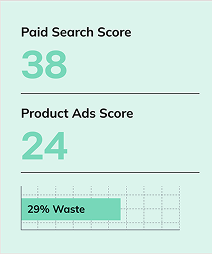
If you’re wondering how prepared your brand is for AI search, Go Fish Digital offers a free eCommerce Audit. Our audit provides a comprehensive evaluation of your eCommerce marketing performance, including:
- AI Visibility
- SEO
- Paid Search & Product Ads
- Website & Conversion Rate Optimization (CRO)
- Social Media (TikTok, Meta, Pinterest, YouTube, and more)
- Email & SMS
- Online Marketplaces (Amazon, Walmart, Target, Ulta, and more)
Get your free eCommerce Audit to uncover your biggest growth opportunities and build an eCommerce strategy that’s ready for the future of search.
Common Questions and Answers Around eCommerce GEO
Top questions and answers around eCommerce GEO:
1. What is eCommerce GEO?
Ecommerce GEO is the process of optimizing an online store, product catalog, product data, content, reviews, technical infrastructure, and authority signals so AI-powered search engines can retrieve, understand, cite, compare, and recommend its products.
Traditional eCommerce SEO focuses on ranking pages in organic search. Ecommerce GEO expands that focus to include visibility inside AI-generated answers, AI shopping recommendations, product comparisons, and conversational buying journeys.
2. How is eCommerce GEO different from traditional eCommerce SEO?
Traditional eCommerce SEO focuses on rankings, organic traffic, metadata, product pages, category pages, internal links, technical crawlability, and revenue from organic search.
Ecommerce GEO includes those foundations, but adds new priorities like:
- AI-generated answer visibility
- LLM citations
- Product recommendation frequency
- Product feed completeness
- Structured product data
- Review signals
- Third-party citations
- Brand entity strength
- Prompt-based content mapping
- AI traffic and assisted revenue
Traditional SEO asks whether your pages rank. Ecommerce GEO asks whether your products are being retrieved, trusted, cited, compared, and recommended.
3. What KPIs should be tracked for eCommerce GEO?
Unlike traditional SEO, where rankings, impressions, clicks, organic traffic, and revenue are primary indicators, eCommerce GEO KPIs focus on visibility and influence inside AI-driven results.
Some of the most important metrics include:
- AI Overview Inclusion Rate – How often your products, categories, or content appear in Google’s AI-generated answers.
- LLM Citation Frequency – The number of times your brand, products, or content are cited by tools like ChatGPT, Perplexity, Gemini, Copilot, or Google AI Mode.
- Product Recommendation Frequency – How often your products are recommended for high-value buyer-intent prompts.
- Query Match Coverage – The percentage of relevant prompts where your brand appears across direct and related buyer questions.
- Competitor Inclusion Rate – How often competitors appear in AI answers when your brand does not.
- Similarity Scores – How closely your content matches AI-generated answers for targeted buyer questions.
- Entity Recognition Strength – How well AI systems identify your brand, products, categories, and differentiators.
- Sentiment and Accuracy – Whether AI-generated answers describe your brand and products correctly and positively.
- Assisted Conversions from AI Mentions – Conversions or inquiries influenced by AI search visibility.
4. What are the best strategies for eCommerce GEO?
The most effective eCommerce GEO strategies center around making your product and category information easier for AI systems to retrieve, compare, validate, and recommend.
This typically involves:
- Product Feed Optimization – Improving product titles, attributes, descriptions, variants, identifiers, pricing, availability, and shipping information.
- Retrieval-Ready Product Pages – Turning product pages into complete, structured, fact-dense resources that answer shopper questions.
- Category Authority Building – Creating category pages and supporting content that help AI systems understand your topical depth.
- Structured Data – Using product, offer, review, aggregate rating, organization, breadcrumb, and FAQ schema where appropriate.
- Review and Reputation Strategy – Strengthening on-site reviews, third-party reviews, expert reviews, and sentiment signals.
- Citation Building – Earning mentions in trusted publications, comparison sites, affiliate guides, best-of lists, and product review pages.
- Buyer Journey Mapping – Creating content for awareness, consideration, comparison, objection handling, and decision-stage prompts.
- AI Visibility Monitoring – Tracking how often your products, categories, and competitors appear across AI search experiences.
5. Why are product feeds important for eCommerce GEO?
Product feeds are important because AI shopping systems need structured information to understand what a product is, who it is for, how much it costs, whether it is in stock, what variants exist, and why it should be recommended.
A feed that only meets minimum requirements may be technically valid but still too thin to support strong AI shopping visibility. Strong product feeds should provide complete, accurate, and confidence-building product information.
For eCommerce GEO, your product feed is not just a paid shopping asset. It is part of your machine-readable product identity.
6. Why is buyer’s journey mapping more important in eCommerce GEO than in traditional SEO?
In a GEO-first world, search is shifting from keyword-driven to question-driven. That means visibility depends on answering the right questions at the right stage of the shopping journey.
Mapping the buyer journey now requires:
- Understanding the specific questions, concerns, and decision points of each customer segment.
- Recognizing that AI prompts can vary based on preferences, budget, context, product use case, and sentiment.
- Creating content that aligns with awareness, consideration, comparison, and decision stages.
- Anticipating query fan-out, where one shopping prompt can lead an AI system to evaluate many related product attributes, competitors, and sources.
By aligning eCommerce GEO with buyer journey mapping, brands can improve visibility throughout the entire AI-driven discovery and decision-making process.
7. Can smaller eCommerce brands compete in AI search?
Yes, but smaller brands need to be specific. Large retailers often have stronger authority, more backlinks, larger catalogs, broader brand recognition, and more third-party mentions. Smaller eCommerce brands can compete by creating deeper, more specific, and more useful content around niche shopper needs.
Smaller brands should focus on:
- Clear positioning
- Specific use cases
- Complete product detail pages
- Niche buying guides
- Strong review quality
- Expertise-driven content
- Third-party mentions
- Structured product data
- Long-tail prompt coverage
- Clear product differentiators
A smaller skincare brand, for example, may struggle to win broad prompts like “best moisturizer,” but it may have a stronger opportunity with prompts like “best fragrance-free moisturizer for sensitive skin under makeup.”
More on AI Search and eCommerce GEO from Go Fish Digital
Note: If you’re an agency owner on this list and you feel the information provided is inaccurate, please reach out to us for corrections on this article.
