



Why Some Super Bowl LX Ads Worked (and Others Didn’t)

Published: February 10, 2026
Share on LinkedIn Share on Twitter Share on Facebook Click to print Click to copy url
The Super Bowl LX remains one of the few moments where brands can still buy national attention at true scale.
That scale alone does not determine impact.
For marketers, the real question isn’t whether an ad was memorable, emotional, or culturally resonant in the moment. It’s whether that exposure translated into recall, engagement, and downstream behavior once the game ended.
While final official numbers have not yet been released, analysts expect Super Bowl LX to surpass last year’s roughly 127.7 million U.S. viewers, potentially reaching 130–135 million across broadcast and streaming. That gives every advertiser the same starting point: a massive, shared attention window.
What happens after that is where performance separates.
This article breaks down which Super Bowl LX commercials earned their space (and which didn’t) by looking past creative reaction and focusing on measurable outcomes. Not whether an ad was entertaining or emotional, but whether it converted attention into action or stopped at awareness.
Reach, Cost, and Exposure
For Super Bowl LX, the base rate for a national 30-second commercial averaged around $8 million, with a limited number of premium placements reportedly selling for more than $10 million. Those higher prices clustered around the most competitive inventory: pre-kickoff, halftime, and late second-half slots, where attention density is highest and audience drop-off risk is lowest.
What’s changed is not just the sticker price, but the context behind it. When Super Bowl ad costs are adjusted for inflation, the upward curve still steepens over time. In constant dollars, the cost of a 30-second spot has continued to rise well beyond what general inflation would predict. The chart below shows that while inflation explains part of the increase, Super Bowl ad pricing has consistently outpaced it—turning the buy itself into a fixed cost of entry rather than a source of advantage.

According to Ipsos data cited by Super Bowl advertisers, only a small fraction of ads, roughly the top 1% for effectiveness, produce measurable post-game lift. When they do, the gains are significant:
- 30–60% increases in unaided brand awareness.
- 25–45% lifts in purchase intent among target audiences.
- 200–500% growth in social mentions and interactions.
- 300–1000% spikes in website traffic during and immediately after the game.
- 400–800% increases in branded search volume.
The gap between average performance and top-tier performance is wide. Most ads generate short-term visibility. Very few generate sustained behavior change.
Our Top Two Commercials from Super Bowl 2026
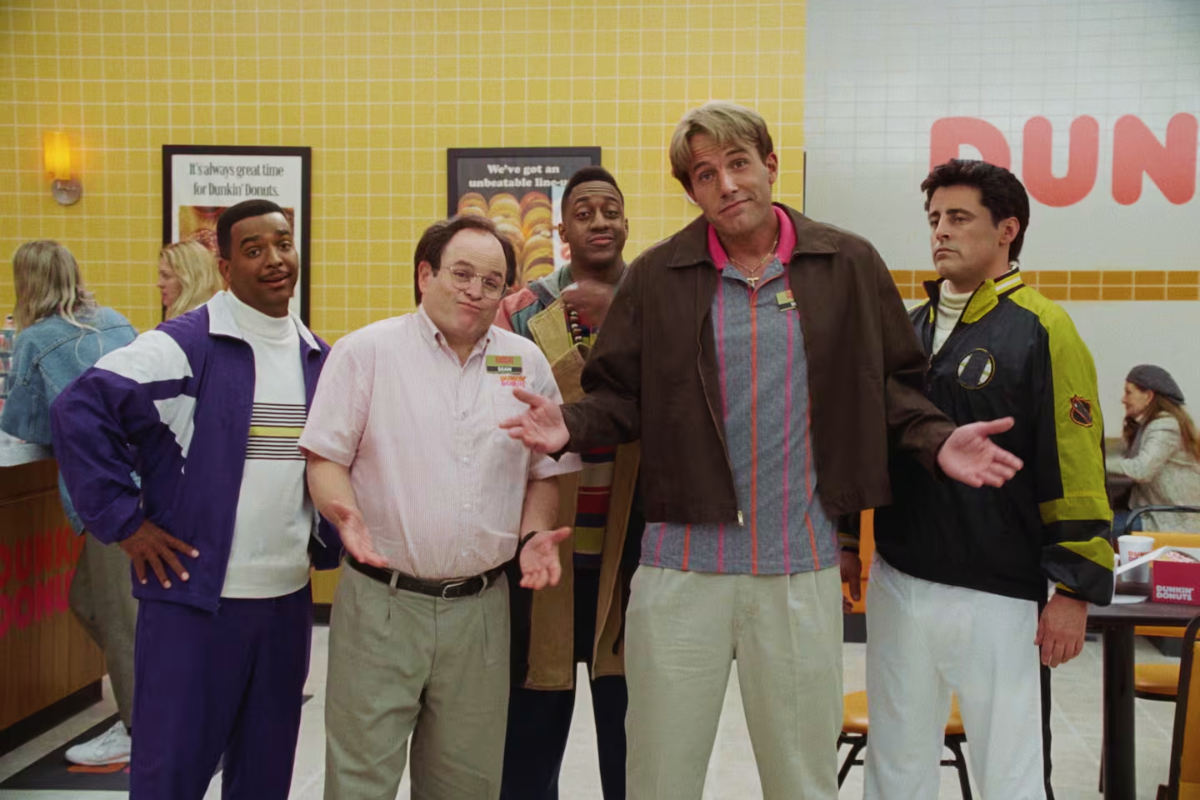
Dunkin’s Good Will Hunting–style sitcom revival worked because the idea was immediately legible and tightly connected to the brand. The reference landed in the first seconds, the humor didn’t obscure the product, and the nostalgia reinforced a personality Dunkin has already earned. Viewers didn’t need context to understand what they were watching or why Dunkin was doing it. That clarity matters when every advertiser is competing for the same attention window.
More importantly, Dunkin didn’t stop at airtime. The brand extended the moment with follow-up social content featuring additional nostalgic characters and paired the campaign with an app-gated incentive: 1.995 million free coffees via the Dunkin’ app using a dedicated code. That sequence—recognition → reinforcement → action—turned reach into behavior. The ad didn’t carry the load alone; the system around it did. That’s why this spot earns a Top 2 position: not because it was funny, but because it was engineered to convert.
Instacart’s Super Bowl LX commercial, titled “Bananas,” leaned into absurdist humor and memorable visuals to communicate a specific product benefit: the app’s Preference Picker feature, which lets customers choose their produce exactly how they like it. The post-game performance signals support that alignment. Paid traffic to Instacart measured 387K visits, representing a 35% increase, alongside an expansion to 4.5K paid keywords, up 33%. That pattern reflects a deliberate push to capture high-intent searches as they occur, particularly during a compressed demand window.
Those signals matter because they point to actions viewers take after seeing the ad: searching, opening, and installing — behaviors far closer to conversion than reach or sentiment alone. Instacart’s category also supports real behavior on days when people are planning food, last-minute needs, and parties. This structure gave the ad a plausible runway to convert attention into measurable outcomes immediately, earning it a Top 2 slot under the criteria of impact, not just exposure.
Our Bottom Two Commercials from Super Bowl 2026
Bosch’s Super Bowl spot succeeded at one thing: stopping attention. The Guy Fieri reveal created surprise, the tonal shift held viewers through the end, and the spectacle generated short-term curiosity. That interruption worked. What didn’t follow was a reason for the viewer to do anything next. The ad didn’t establish a clear product hook, value proposition, or behavioral next step tied to Bosch’s core offering.
The post-game performance signals reflect that gap. Organic traffic spiked immediately after the broadcast, climbing into the ~380K–395K range, before quickly returning to baseline within days. Keyword gains followed the same pattern: a brief surge driven by brand curiosity, followed by rapid decay as interest normalized. This is consistent with exploratory searches rather than solution-driven intent. Without supporting content, incentives, or owned-channel capture, the sequence collapsed quickly: ad airs → curiosity spike → brief traffic lift → baseline. That’s not a creative failure. It’s a system failure.
Social performance showed a similar drop-off. A pre-game reel posted three days before kickoff reached nearly 900K views, but subsequent posts tied to the Super Bowl moment collectively drew only ~20K views, indicating limited audience retention once the initial novelty passed. Bosch earned attention, but didn’t design continuity. In a $8–10M media environment, that absence places it firmly in the Bottom Two.
Hims & Hers’ Super Bowl appearance followed a pattern already under strain. After its 2025 Super Bowl ad tied to weight-loss medications, the brand faced criticism from regulators and industry experts over marketing claims related to compounded GLP-1 drugs, including concerns around overstated benefits and blurred distinctions from FDA-approved treatments. That tension carried into this year’s game.
Hims & Hers’ Super Bowl commercial was, on its own terms, effective.The ad avoided celebrity endorsements, kept production restrained, and relied on a clear title and message rather than spectacle. From a creative standpoint, it landed and generated attention without inflating spend.
That attention, however, ran directly into business reality. In the days surrounding the Super Bowl, the FDA announced plans to restrict compounded GLP-1 drugs, explicitly naming companies like Hims & Hers, with related matters referred to the Department of Justice. The market response was immediate: Hims & Hers stock fell roughly 27% over five days and continued sliding even after the commercial aired.
This is why the brand lands in the Bottom Two. The ad performed in isolation, but regulatory pressure undercut the very products it was promoting. In that environment, visibility doesn’t convert—it magnifies risk. The commercial reached people, but the runway to turn that attention into repeatable outcomes wasn’t there.
Key Takeaways
Every brand that advertised during Super Bowl LX purchased the same thing: a national attention window. What separated strong performers from weak ones wasn’t creative quality alone, but whether that attention was designed to move somewhere. Dunkin and Instacart treated the Super Bowl as the beginning of a system. Bosch, Budweiser, and Hims & Hers treated it as the moment itself.
Post-game infrastructure proved more important than game-day reaction. The ads that held value were supported by owned channels, scaled paid and organic programs, and clear next steps that required little explanation. Brands without that foundation followed the same pattern: a short spike in interest, rapid decay, and a return to baseline.
Nostalgia played a role, but only when it was operationalized. Dunkin paired familiarity with follow-up content and app-based incentives that converted attention into action. Budweiser relied on emotional resonance without a conversion path and saw no measurable downstream lift. Emotion alone didn’t compound.
At $8–10 million per spot, the Super Bowl no longer forgives weak funnels. Awareness without follow-through isn’t neutral, it’s waste. The brands that earned their space didn’t just entertain. They designed what happened next.
