



AI Referrals From ChatGPT: A Guide to Tracking and Increasing Conversions

Published: August 07, 2026
Share on LinkedIn Share on Twitter Share on Facebook Click to print Click to copy url
Summarize with ChatGPT

AI platforms like ChatGPT, Claude, Gemini, and Perplexity are reshaping how people search online. They are no longer just brainstorming or summarization tools. In many cases, they are the starting point for decision-making.
Instead of scanning multiple search results, users now ask one question and receive a curated, confident answer. That shift is beginning to transform how people interact with websites.
These tools are cutting out much of the traditional top-of-funnel content. In some cases, users skip the research phase entirely and jump straight to conversion.
Real-World Example: AI Referrals Driving Direct Conversions
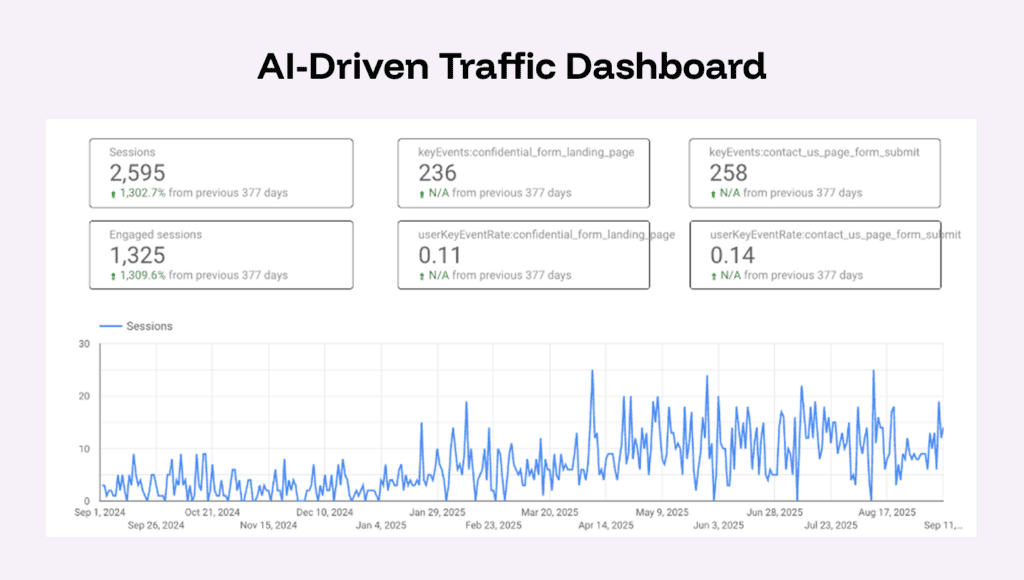
We built a custom dashboard for a client shown below, a prominent whistleblower law firm, to track referral traffic from AI tools. The results surprised us.
The top three most-clicked pages from AI referrals were:
- The homepage
- The contact form
- The confidential submission page
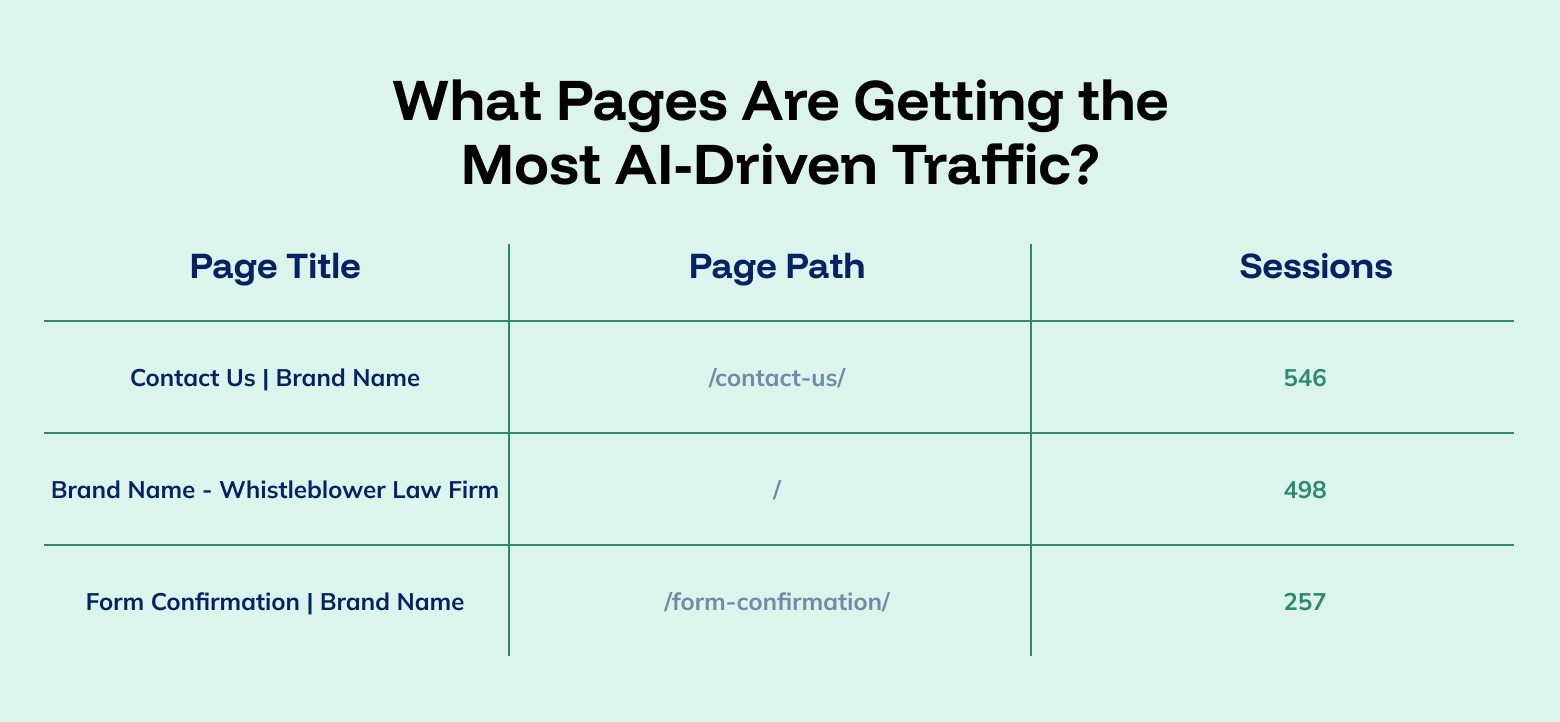
This is unusual. In typical search journeys, users land on blog posts or service pages first, then move toward conversion. With AI referrals, users seem to be asking tools something like:
“Who can I report corporate fraud to confidentially?”
Instead of browsing, they are being sent directly to the firm’s most high-intent pages. Even more telling, form submission volume increased year-over-year.
Client Snapshot
- High-intent pages are driving most AI traffic
- Faster funnel: skipping educational steps
- Increased confidential form submissions
Implications for User Conversion Funnels
This shift suggests the informational stage is happening inside AI tools. By the time users land on a site, they are ready to act.
Key takeaways:
- Top-of-funnel content is being compressed: Research and education often occur inside ChatGPT, Claude, or Perplexity.
- Mid- and bottom-funnel content is more valuable: Homepages, contact forms, and service pages must be structured and semantically rich.
- SEO must expand beyond Google SERPs: Your SEO efforts should also focus on visibility in AI retrieval engines.
Why SEOs Must Adapt to AI-Driven Search Behavior
Search journeys are fragmenting. Some still begin in Google, others with “Hey ChatGPT…”
Traditional SEO signals like backlinks and keywords remain important, but AI tools select results differently. They prioritize semantic relevance, topical authority, and structured information.
If your content is not being cited as a trusted resource, you miss out on high-value clicks. Worse, if you are not tracking AI referrals, you may not even realize your funnel is shifting.
A recent Ahrefs study showed that Google’s AI Overviews reduce clicks to websites by 34.5 percent. The behavior is similar across AI assistants: they summarize content and direct users to fewer but more trusted sources.
How Go Fish Digital Tracks and Measures AI Referral Traffic
At Go Fish Digital, our SEO team uses custom dashboards to monitor referral traffic from domains such as:
- chat.openai.com
- perplexity.ai
- gemini.google.com
- copilot.microsoft.com
- you.com
- iask.ai
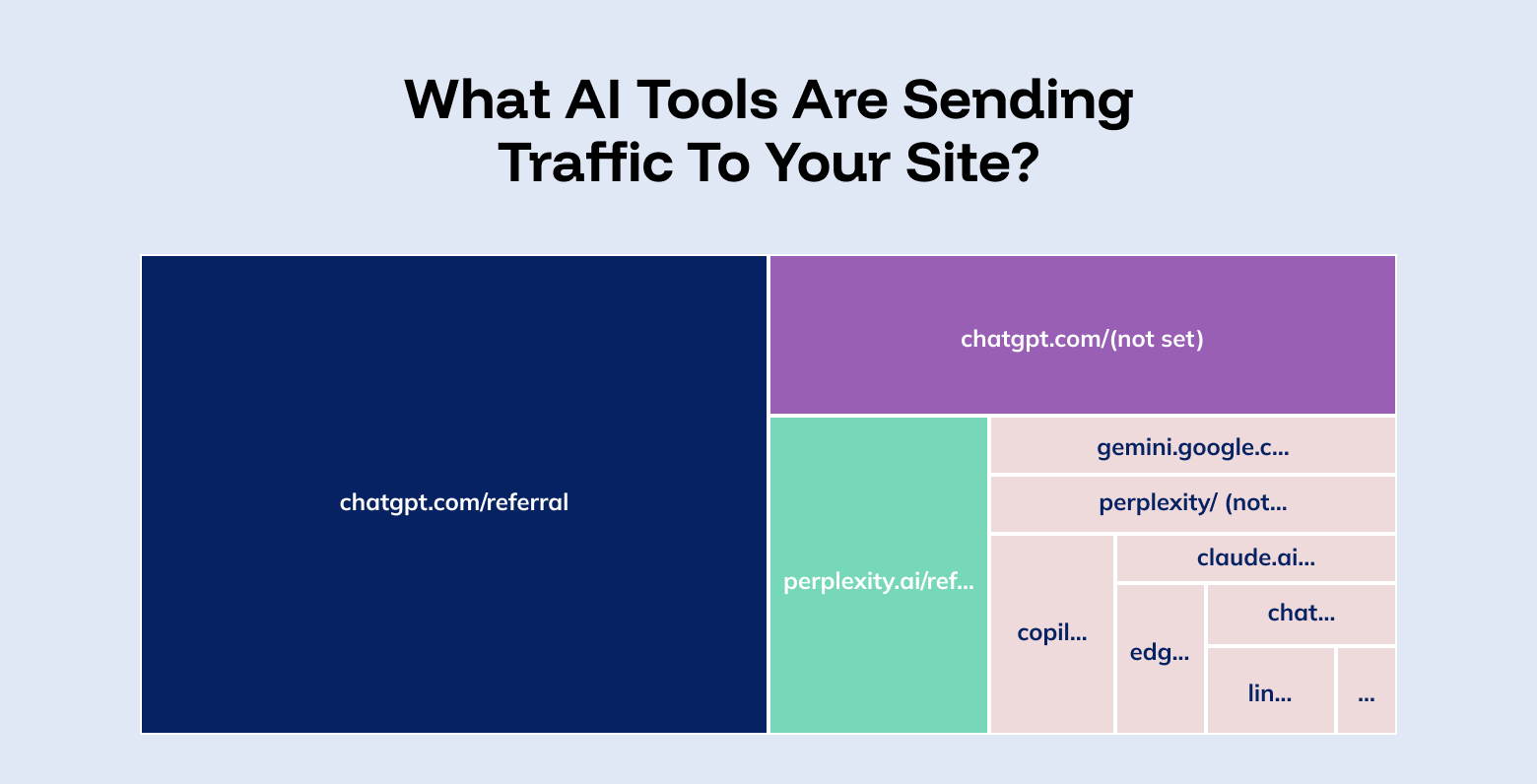
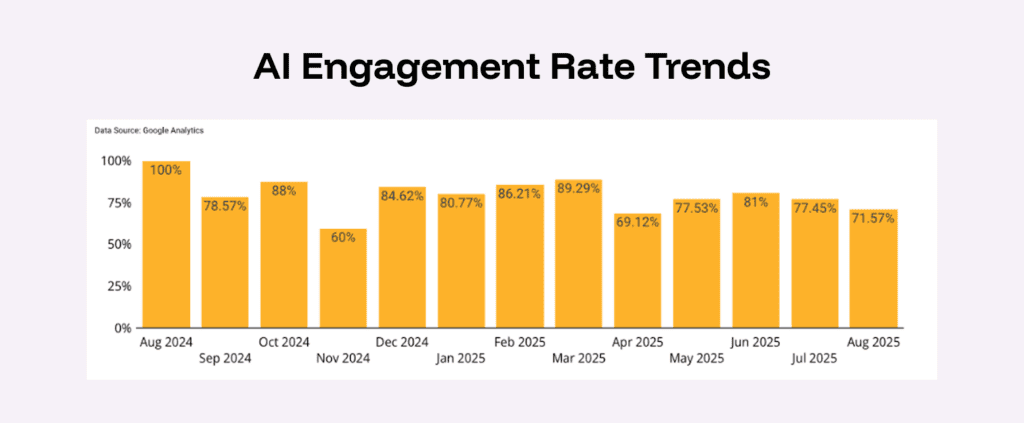
These dashboards capture both traffic sources and engagement behavior. We can see whether AI-referred users are more likely to convert, and often they are.
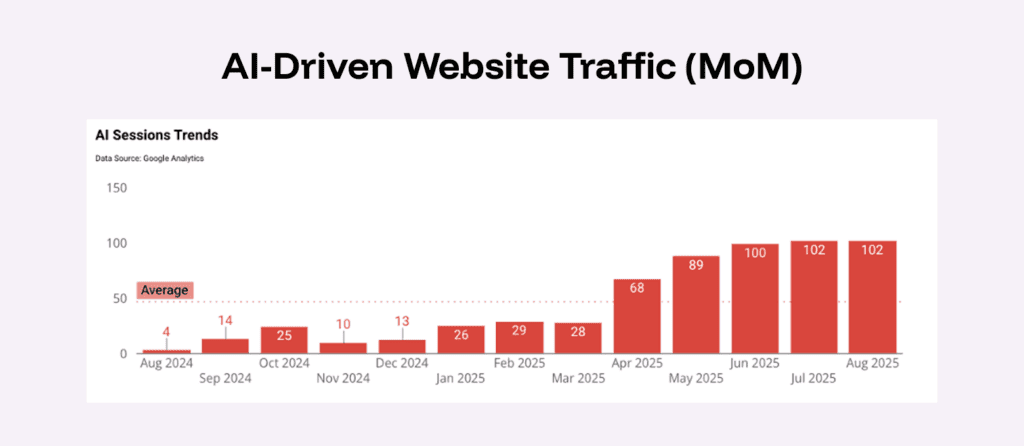
If you see high bounce rates on informational content but strong conversion spikes on forms or homepages, AI referrals may already be reshaping your funnel.
What’s Next: 5 Steps to Optimize for AI Referrals
1. Add FAQs and Q&A Content to High-Value Pages
AI platforms are designed to answer specific questions. Adding concise, direct Q&A content to product, service, and industry pages makes it easier for these tools to identify relevant information and use your website as a supporting source.
Focus on questions that reflect how customers naturally search and speak, especially questions related to costs, qualifications, processes, comparisons, eligibility, and next steps.
For example, a law firm might answer:
- Can I report corporate fraud anonymously?
- What protections are available to whistleblowers?
- How do I know whether I have a valid whistleblower claim?
- What happens after I submit confidential information?
Place the most important answer at the beginning of each response, then provide supporting context. This structure serves users who want a quick answer while still giving search engines and AI systems enough detail to understand the topic.
2. Use Structured Data Where It Accurately Describes the Page
Structured data helps search engines interpret the purpose, content, and entities associated with a page. Where appropriate, implement relevant Schema.org markup for organizations, legal services, products, articles, authors, breadcrumbs, and other supported content types.
Schema should reinforce information that is already visible on the page. It should not be used to add claims, services, reviews, or details that users cannot see in the page content.
Although structured data does not guarantee inclusion in an AI-generated answer, it can make important information easier for search systems to classify. Coordinate with your development or SEO team to validate markup and monitor implementation errors.
3. Strengthen Your Highest-Intent Pages
AI-referred visitors may arrive later in the decision process than traditional organic search visitors. That means your homepage, service pages, contact forms, consultation pages, and submission pages need to answer critical questions immediately.
Review these pages for:
- A clear explanation of who you help.
- Specific descriptions of your services.
- Visible trust and credibility signals.
- Clear privacy or confidentiality information.
- Simple navigation and accessible forms.
- Prominent calls to action.
- Fast load times and strong mobile usability.
Avoid relying on vague marketing language. Clearly state what your organization does, who qualifies for the service, what users should expect, and what action they should take next.
For sensitive industries such as legal services, healthcare, or financial services, reduce uncertainty around privacy, response times, and the information required to get started.
4. Track AI Referral Traffic and Conversion Behavior
Create a dedicated reporting view for traffic from known AI platforms. This may include referral domains associated with ChatGPT, Perplexity, Gemini, Copilot, Claude, You.com, and other emerging tools.
In GA4 or a reporting platform such as Looker Studio, evaluate more than session volume. Track:
- Landing pages
- Engagement rates
- Contact form submissions
- Phone calls
- Downloads
- Qualified leads
- Conversion rates
- Assisted conversions
Compare AI referral behavior with organic search, paid search, direct, and other referral sources. A small number of AI-referred sessions may still be meaningful when those visitors are disproportionately likely to complete high-value actions.
Referral data will not capture every interaction with an AI platform. Some traffic may appear as direct, unassigned, or another source. Treat tracked referrals as a useful directional signal rather than a complete measurement of AI influence.
5. Monitor How AI Tools Describe and Recommend Your Brand
Referral reporting shows when users click through from an AI platform, but it does not show the full context of the recommendation. Regularly test the questions your prospective customers are likely to ask and review which brands, pages, and sources appear in the responses.
Look for patterns such as:
- Whether your brand is mentioned.
- How accurately your services are described.
- Which competitors are recommended.
- Which sources are cited.
- What topics consistently trigger your brand.
- Where important information is missing or outdated.
Use these findings to guide content improvements. If AI tools regularly cite competitors for a specific question, review whether your website provides a clearer, more authoritative answer. If your brand is described inaccurately, strengthen the relevant service pages, organization details, author information, and third-party profiles.
The goal is not to optimize for a single prompt. It is to build a consistent body of accurate, useful, and trustworthy information that AI platforms can retrieve across a range of related questions.
Final Thoughts
AI referrals are not just noise. They are a new form of high-intent traffic that bypasses traditional funnels.
If your site is not optimized for AI visibility, you risk missing some of the most valuable clicks. If you are not tracking these referrals, you may be blind to major shifts in your user funnel.
Start by measuring AI referrals, strengthening your most important landing pages, and reviewing how consistently your brand appears across AI-generated results.
Want to see how visible your brand is in AI search? Request a free GEO scorecard.